What the VALORANT Champions Shanghai group stage delivered as the 2026 season heads to its final week
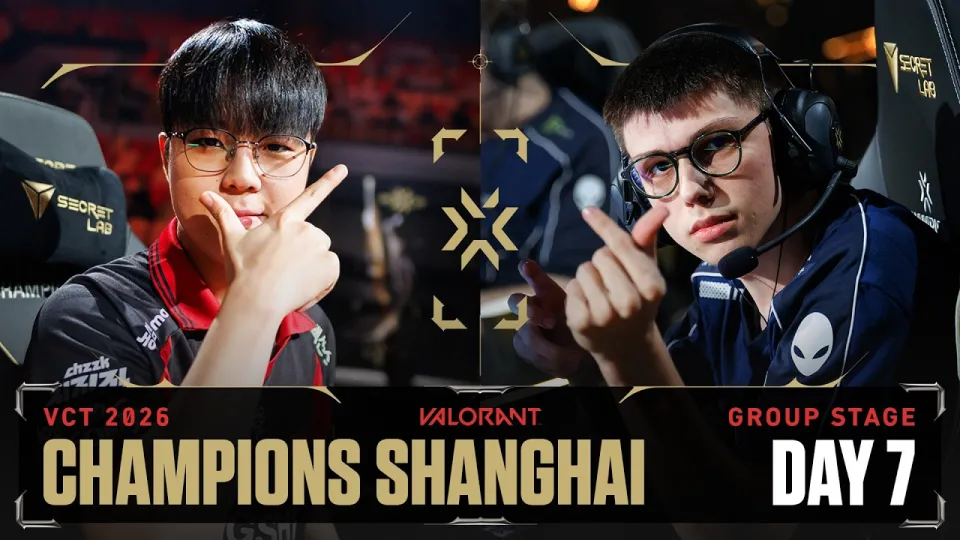
Video: VALORANT Champions Shanghai — Group Stage — Day 7
You can order the same kind of articles for your own video to boost it on YouTube and Google. Just message the Telegram bot @sat_sit_bot. Articles with your video embedded are written and posted by the bot itself — on popular topical sites (no ads). Try it free: 50 articles on us.
· based on the channel VALORANT Champions Tour
VALORANT Champions Shanghai is the final international event of the 2026 VCT season, where 16 teams from the Americas, CN, EMEA and Pacific fight for the world title between September 24 and October 18. The group stage decides which squads reach the playoff bracket and which go home before the trophy rounds. Day 7 of that stage, published by the VALORANT Champions Tour on October 1, is a useful snapshot of where the meta, the regions and the production stand — and you can follow results and clips as they drop via the official VALORANT Esports X account.
How the VALORANT Champions Shanghai group stage is structured
The group stage is the filter that turns a 16-team field into a playoff bracket, and every map matters because tiebreakers are decided on round differential. Four regions — Americas, CN, EMEA and Pacific — send their qualified rosters to Shanghai, and the opening phase mixes them so that regional dominance is tested immediately rather than saved for a single-elimination bracket. In practice this means a CN team can eliminate an EMEA favorite in week one, and a Pacific squad can quietly bank a top seed while the bigger names trade blows. Because Champions is the last event of the year, teams arrive with months of mapped-out set plays; the group stage is where those structures get stress-tested by unfamiliar opponents. The broadcast description frames the event as the moment when "familiar names, new contenders, and a fearless generation of challengers" converge, and the Day 7 slate reflects exactly that mix of legacy orgs and first-time Champs qualifiers.
Why 2026 feels like a changing of the guard
The 2026 season produced two different Masters champions, which guarantees Shanghai crowns a new world title holder outside that pair. That detail matters more than it looks: in previous years the same handful of organizations recycled international trophies, and a second different Masters winner in one season signals that preparation depth has spread across regions. The broadcast copy leans into this, describing new contenders, broken expectations and a shift in the competitive order. For viewers, it means group-stage matches are no longer formalities before a predictable playoff run — a favorite dropping a map to a debutant region is now a realistic outcome rather than a shock. It also raises the stakes on seeding: a team that peaks in the group stage but lands a brutal bracket path can still exit early, so the Day 7 matches carry real consequences beyond simple qualification.
Reading the Day 7 broadcast like a coach
Day 7 is best watched as a set of recurring situations rather than a highlight reel, because the same problems repeat across maps and teams. A practical checklist for anyone reviewing the VOD:
- Track pistol and eco conversion. Sides that lose anti-eco rounds give away two or three free rounds per half, which is usually the whole map.
- Watch retakes in 5v2 and 4v2 scenarios. Failed numbers advantages point to communication breakdowns, not aim.
- Note utility usage on attack. Teams that default to the same smoke-and-flash sequence get read after four rounds and stall out.
- Log every tech pause and what changed after it. Momentum swings after long stoppages are a real pattern, not an excuse.
- Compare site holds on defense. A site that gets taken with two utility pieces is a structural hole, not bad luck.
A specific moment viewers flagged involves a Yoru clone that briefly looked like it was helping hold a site — a reminder that agent utility in the current meta creates visual noise that even pro players misread in real time.
The tech pause problem and what it does to a broadcast
The volume of technical pauses on Day 7 became the most repeated complaint in the chat, and it is a legitimate production issue rather than a meme. Long stoppages break the rhythm of a best-of series: players cool down, coaches get extra talk time, and the audience loses the thread of a half. For a group stage with multiple matches stacked back to back, each pause also pushes the schedule and shortens the analyst desk segments that explain the stakes. Tournament organizers typically handle this with server restarts, hardware swaps and replayed rounds, but the viewer experience still suffers. When you rewatch the VOD, treat pauses as context: check whether the team that was trailing before a stoppage came back with a different economy plan, because that is often where a coach's mid-series adjustment shows up.
What the CN results say about the region's ceiling
The most heated discussion around Day 7 concerns CN teams losing rounds that looked unlosable — anti-ecos, 5v2 retakes and post-plant situations where the setup was already in place. The pattern critics describe is a lack of adaptation: when scripted set plays stop working, the mid-round calling becomes passive and utility gets dumped without a follow-up. That is a coaching and structure problem more than a mechanical one, and it is fixable within a season. The counterargument is equally fair: CN qualified multiple teams into a 16-slot field, and the gap between the region's top side and the fourth-best team is smaller than the gap in older VCT years. Either way, the group stage exposes it publicly. A single clean anti-eco conversion or a won 5v2 changes a map, and maps change seeding.
Where to follow results, clips and schedule changes
The official VALORANT Esports channels are the fastest source for bracket updates, tech-pause notes and highlight cuts after each match day. The broadcast description points to X, Facebook, Instagram, TikTok, Twitch, YouTube and Kick, plus a Flickr photo archive and the official news page at valorantesports.com. For English-speaking fans the practical loop is: check the X account for results and schedule shifts, watch the full VOD for map context, then use short-form clips to catch rounds you missed. Partners listed for the season include AWS, Coinbase, EWC, ENC, Globant, HyperX, Mastercard, OnePlus, Red Bull, Secretlab and Verizon, which is a good indicator of how much production infrastructure sits behind a three-week event.
Useful links
- VALORANT Esports on X — results, bracket updates, clips
- VALORANT Esports on Facebook
- VALORANT Esports on Instagram
- VALORANT Esports on TikTok
- VALORANT on Twitch
Final takeaway
The Shanghai group stage is doing what a good opening phase should: separating teams that can adapt mid-series from teams that only execute prepared plays. Two different Masters champions in one season already guarantee a fresh world title holder, and the Day 7 slate showed both the depth of the field and the production problems that come with a three-week, multi-region event. If you only watch one thing, watch the eco and retake rounds — they explain more about who wins Champions than any highlight clip. The full Day 7 broadcast comes from the VALORANT Champions Tour channel, which is the primary source for the rest of the group stage and the playoff run. For schedule changes and bracket news, keep the official VALORANT Esports X account open.
Key takeaways
- 16 teams from Americas, CN, EMEA and Pacific compete for the 2026 VALORANT world title in Shanghai.
- The event runs from September 24 to October 18, with Day 7 of the group stage broadcast on October 1.
- Two different Masters champions in 2026 mean Shanghai cannot produce a repeat title holder from that pair.
- Viewers flagged repeated tech pauses and long CN map losses on eco and in 5v2 retakes.
- Official updates and clips land on the VALORANT Esports X account linked in the broadcast description.
Questions & answers
How many teams play at VALORANT Champions Shanghai and where do they come from?
Sixteen teams qualify, drawn from four regions: Americas, CN, EMEA and Pacific. They compete across a group stage that runs from late September into October, with the playoff bracket deciding the 2026 world champion. The regional mix is why group matches often pair unfamiliar opponents.
Why were there so many technical pauses during the Day 7 broadcast?
Technical pauses usually come from server instability, hardware failures or client issues that require a restart, and a stacked match schedule makes each one more visible. The broadcast does not detail the cause of each stoppage. For viewers, the practical effect is lost momentum and a longer VOD.
Is CN really the weakest region at Champions?
The criticism centers on lost anti-ecos, failed 5v2 retakes and predictable utility usage once set plays break down, which is a structure issue rather than raw aim. But CN placed multiple teams in a 16-slot field, and the region's top side has beaten international opponents. Group-stage results alone are a small sample.
Where can I watch the rest of the group stage and the playoffs?
The VALORANT Champions Tour YouTube channel carries the full broadcasts, and Twitch plus Kick stream matches live. The official X account posts bracket updates, schedule changes and highlight clips. Photos and news are also published through valorantesports.com.
Source: VALORANT Champions Shanghai — Group Stage — Day 7 · Markdown version